Overview
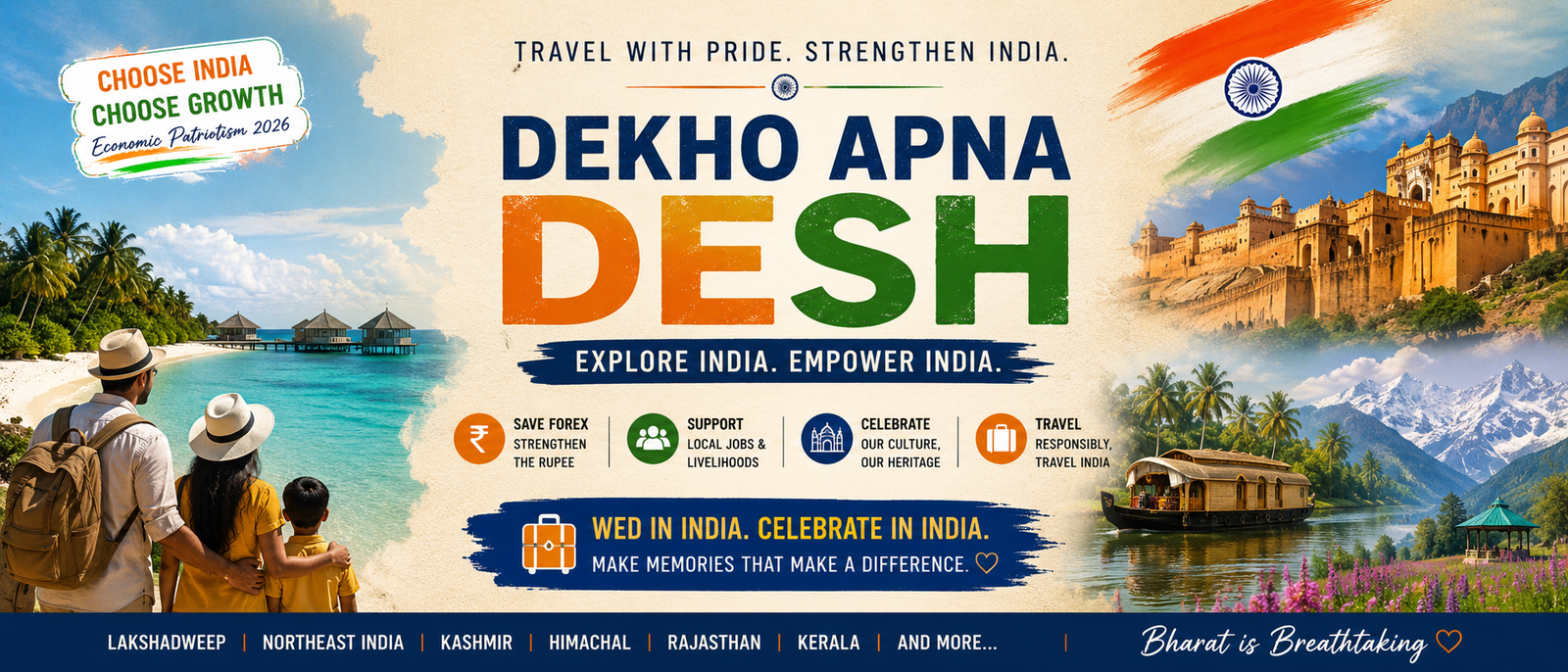
India is witnessing a powerful shift in the way people think about travel, celebrations, and national responsibility. Following Prime Minister Narendra Modi’s recent “Seven-Point Appeal” on May 10, 2026, the spotlight has firmly turned toward Domestic Tourism India and the growing idea of Economic Patriotism 2026. What initially appeared to be a tourism campaign is now emerging as a nationwide movement linked to economic stability, cultural pride, employment generation, and the vision of Atmanirbhar Bharat.
The message from the Prime Minister was simple yet impactful: before looking abroad for vacations, destination weddings, or luxury experiences, Indians should rediscover the beauty, diversity, and strength of their own country. Under initiatives like Dekho Apna Desh and Vocal For Local, the government is encouraging citizens to support Indian destinations, Indian businesses, and Indian livelihoods.
At a time when the Indian Rupee recently weakened against the US Dollar amid the ongoing West Asia crisis, this domestic tourism push carries serious economic significance. Every international vacation paid in dollars or euros contributes to foreign exchange outflow. By choosing Indian destinations instead, citizens directly strengthen the local economy while helping conserve valuable forex reserves.
This is the foundation of India’s new tourism narrative: travel within India is no longer just a leisure activity — it is an act of nation-building.
External Reference: Incredible India – Official Tourism Portal
Economic Patriotism 2026: Why Domestic Tourism India Matters More Than Ever
The core idea behind Economic Patriotism 2026 is to encourage Indians to spend within the country rather than sending money overseas through discretionary luxury travel. Every year, thousands of affluent Indians spend heavily on vacations in the Maldives, Thailand, Switzerland, Dubai, and Europe.
India’s foreign exchange reserves play a critical role in stabilizing the economy and protecting the Rupee from global financial pressures. During periods of geopolitical instability, such as the current tensions in West Asia, conserving forex becomes especially important. The government’s domestic tourism strategy therefore aligns directly with the larger economic goals of Atmanirbhar Bharat.
When citizens choose Domestic Tourism India, the money circulates within the national economy. Hotels hire local staff, restaurants buy produce from nearby farmers, transport providers earn more income, and local artisans gain wider exposure. Unlike foreign vacations, domestic tourism creates a multiplier effect that supports entire communities.
This is where Vocal For Local transforms from a slogan into a practical lifestyle movement.
External Reference: Reserve Bank of India – Forex Reserves Data
Wed In India: Transforming Celebrations Into Economic Opportunities
One of the most talked-about elements of the Prime Minister’s appeal was the renewed focus on Wed In India and “Celebrate in India.” In recent years, overseas destination weddings have become increasingly popular among wealthy Indian families. Lavish ceremonies in Thailand, Dubai, Turkey, Italy, and Bali often involve enormous spending that benefits foreign hospitality industries rather than Indian businesses.
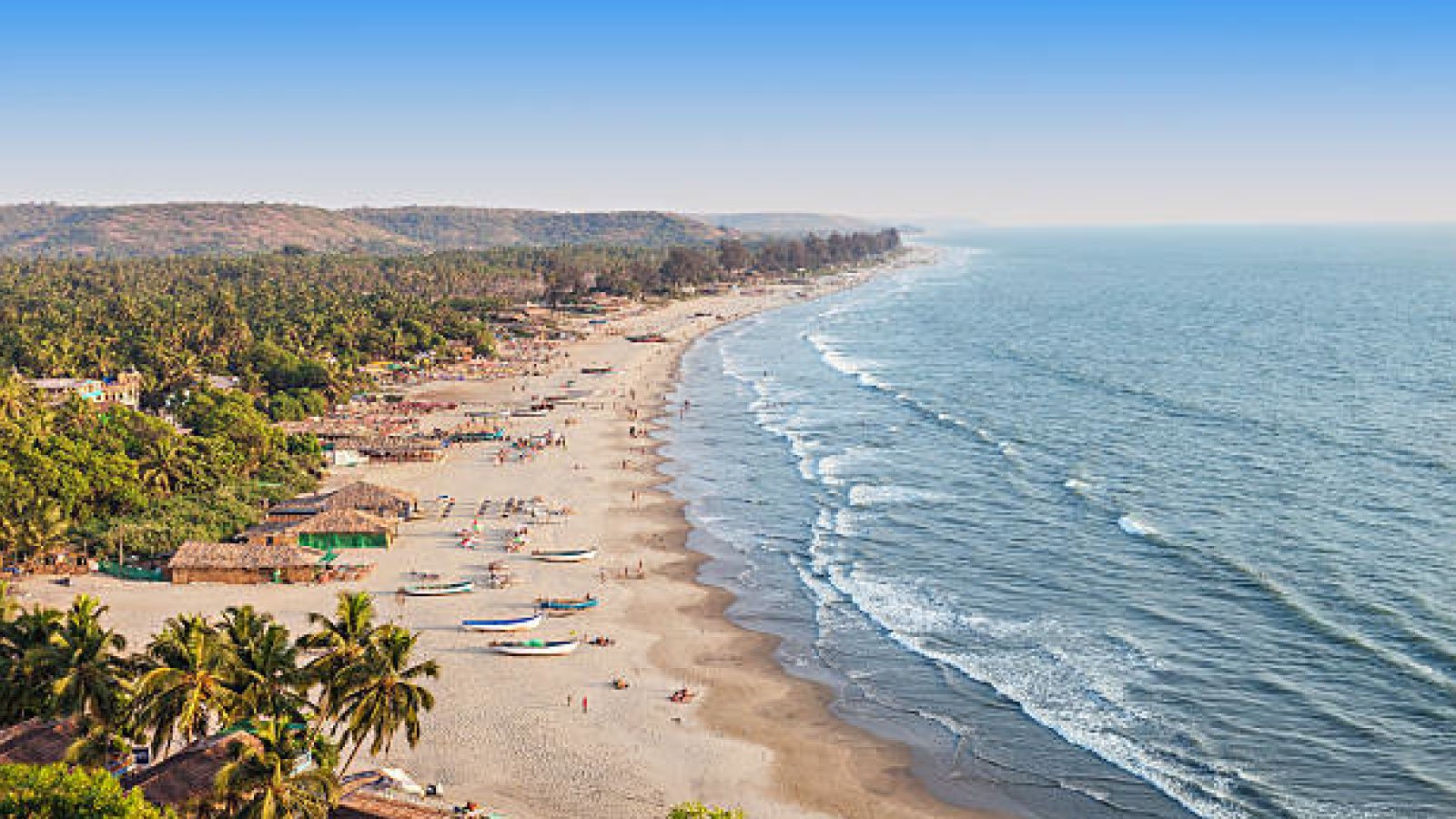
India itself offers some of the most spectacular wedding destinations in the world. The royal palaces of Rajasthan, the tranquil backwaters of Kerala, the beaches of Goa, the valleys of Kashmir, and the scenic hills of the Northeast provide luxurious and culturally rich experiences that rival any international venue.
A single destination wedding in India benefits:
- Local caterers and chefs
- Decorators and florists
- Folk dancers and musicians
- Handloom and textile artisans
- Makeup artists and photographers
- Tour guides and transport providers
- Small hotels and event planners
There is also an emotional layer attached to the Wed In India movement. Hosting celebrations in iconic Indian locations allows families to showcase the country’s architecture, heritage, traditions, cuisine, and craftsmanship.
External Reference: Ministry of Tourism, Government of India
Discovering Indian Travel Gems Instead of Looking Abroad
Lakshadweep vs. Maldives
Lakshadweep has rapidly emerged as one of the strongest symbols of India’s domestic tourism push. With crystal-clear waters, coral reefs, scuba diving opportunities, and untouched beaches, the islands are increasingly being positioned as India’s answer to the Maldives. Choosing Lakshadweep over international island destinations directly supports Domestic Tourism India while reducing foreign currency outflow.
Northeast India vs. Southeast Asia
States like Meghalaya, Arunachal Pradesh, Sikkim, and Nagaland offer equally mesmerizing landscapes and authentic cultural experiences. The waterfalls of Meghalaya, the monasteries of Arunachal Pradesh, the tribal heritage of Nagaland, and the untouched beauty of Sikkim are now being highlighted under campaigns like Dekho Apna Desh.
Kashmir & Himachal vs. Switzerland
India’s Himalayan regions continue to rival Europe’s alpine destinations. Khajjiar, famously called the
Mini Switzerland of India
, along with Gulmarg, Gurez Valley, and Tawang,
showcase breathtaking natural beauty. Yet Indian destinations offer something deeper: emotional familiarity, rich
traditions, diverse cuisines, and immersive cultural experiences.
External Reference: Explore Indian Destinations – Incredible India
Domestic Tourism India and Employment Generation
Tourism contributes nearly 5% to India’s GDP and supports millions of jobs across hospitality, transport, handicrafts, food services, and local commerce. Every domestic trip creates employment opportunities for:
- Drivers and taxi operators
- Homestay owners
- Tour guides
- Local artisans
- Restaurant workers
- Photographers
- Handicraft sellers
- Adventure tourism operators
When travelers choose Indian Travel Gems over international destinations, they directly contribute to local economic resilience.
External Reference: WTTC – India Travel & Tourism Economic Impact
Infrastructure Growth Supporting Dekho Apna Desh
Under Budget 2026–27, the government announced several infrastructure upgrades to make domestic travel more accessible:
- Expansion of Vande Bharat high-speed rail corridors
- Improved airport connectivity
- Modern highways and expressways
- 4,000 new e-buses for tourism routes
- Smart tourism infrastructure projects
These developments are transforming domestic travel experiences. Faster connectivity and upgraded infrastructure are making Indian tourism more convenient, comfortable, and accessible than ever before.
External Reference: Indian Railways – Vande Bharat Information
Vocal For Local: A Lifestyle Shift for Modern India
The rise of conscious travel behavior among younger Indians is also fueling the domestic tourism movement. Modern travelers increasingly value authenticity, sustainability, local culture, and meaningful experiences over superficial luxury. This aligns perfectly with the philosophy of Vocal For Local.
Today’s travelers seek:
- Local cuisine and regional flavors
- Community-based tourism experiences
- Eco-friendly travel
- Heritage stays and wellness retreats
- Slow travel and cultural immersion
From spiritual journeys in Varanasi to eco-tourism in Coorg and tribal festivals in Nagaland, India offers experiences unmatched anywhere else in the world.
External Reference: Vocal For Local – Official Initiative
Bharat Is the Destination of the Future
Prime Minister Narendra Modi’s “Seven-Point Appeal” has successfully reframed tourism as a national responsibility linked to economic resilience and cultural pride. Through initiatives like Domestic Tourism India, Dekho Apna Desh, Wed In India, Vocal For Local, and Atmanirbhar Bharat, the government is encouraging citizens to rediscover the extraordinary beauty of their own nation.
The movement is bigger than travel. It is about:
- Strengthening the Rupee
- Supporting Indian livelihoods
- Celebrating Indian heritage
- Transforming tourism into Economic Patriotism
The world may be beautiful, but Bharat remains breathtaking.
And in 2026, choosing India is not just a travel decision — it is a statement about the future Indians want to build together.