The Morning That Split in Two
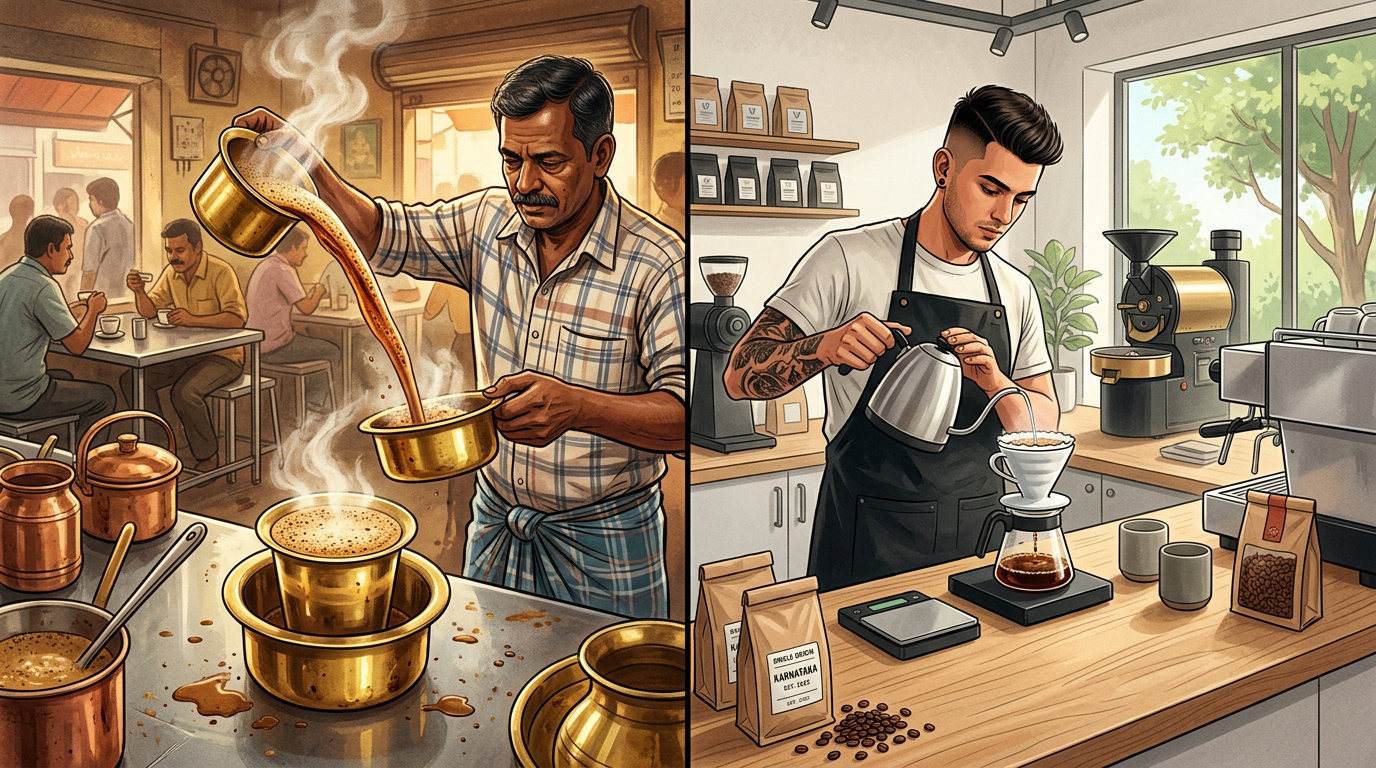
At 6:30 AM in a Chennai mess, the day begins before the sun fully arrives. Stainless steel tumblers clink against dabarahs, waiters move with quiet urgency, and the air carries a deep, roasted aroma layered with something unmistakably earthy—chicory. Behind the counter, a practiced hand lifts a tumbler high and pours a stream of coffee into a waiting dabarah below. The liquid stretches mid-air, catching light before landing with a soft hiss, forming a thick froth. This is not just coffee being served; it is a ritual performed daily, unchanged for decades.
Now shift the scene to Indiranagar in Bengaluru. A glass façade reflects the morning light. Inside, everything is deliberate—muted tones, clean lines, and silence broken only by the soft hum of a grinder. A barista measures coffee beans on a digital scale, adjusts grind size with precision, and pours water slowly over a filter, watching the bloom rise and settle. There is no spectacle here, only control. The cup that follows is lighter in body, sharper in flavour, and layered with notes that are described as citrus, floral, or berry.
Two mornings. Two coffees. One evolving culture.
The Science Behind the Cup
The difference between these two worlds begins with what goes into the brew.
In traditional South Indian filter coffee, the blend itself tells a story. Coffee is rarely alone. It is paired with chicory, often in ratios ranging from 80:20 to 60:40 depending on preference and region. Chicory is not an afterthought—it is intentional. It deepens the colour, enhances bitterness, and most importantly, gives the coffee its signature body and lingering froth. The brewing method is slow and patient, using a metal filter that allows hot water to drip through the grounds, creating a concentrated decoction. This decoction is then combined with hot milk and sugar, resulting in a beverage that feels complete and comforting.
Modern coffee, often referred to as third-wave coffee, moves in the opposite direction. It removes everything that is not essential. There is no chicory, no blending for consistency. Instead, there is a focus on origin. Beans are sourced from specific farms or regions, and their unique characteristics are preserved rather than masked. A coffee from Ethiopia may taste bright and fruity, while one from Chikmagalur may lean toward chocolate and spice. The brewing methods—whether pour-over, AeroPress, or French press—are designed to highlight these nuances.
Where traditional coffee values familiarity, modern coffee celebrates variation. One is built for reliability, the other for exploration.
A New Generation, A New Identity
For years, the divide between these two styles was clear. Traditional filter coffee belonged to homes and local eateries, while specialty coffee was reserved for urban cafés and a niche audience. But that divide is no longer as rigid.
Gen-Z has entered the conversation, and with it, a shift in how coffee is perceived and consumed.
On social media, brass tumblers and dabarah sets have reappeared, not as relics but as design statements. Carefully styled images of filter coffee sit alongside minimal ceramic cups and latte art. What was once everyday utility has become aesthetic. The appeal lies in its authenticity—a connection to heritage that feels grounded and real.
At the same time, this generation is not willing to compromise on awareness. They want to know where their coffee comes from, how it is grown, and whether it is ethically sourced. Fair-trade labels, organic farming practices, and sustainability are no longer optional considerations—they are expectations.
This creates an interesting overlap. The same individual who appreciates the nostalgia of a brass tumbler is also willing to spend on a single-origin brew. They are not choosing between the past and the present. They are combining both.
Brewing at Home: Where Tradition Meets Technique
As coffee culture evolves, so does the desire to recreate it at home. The kitchen is becoming a space where both tradition and modern techniques coexist.
Traditional Filter Coffee Setup
- Metal coffee filter
- Dabarah and tumbler set
- Filter coffee powder with chicory
- Milk
- Sugar
To prepare, add coffee powder to the filter and pour hot water over it. Allow the decoction to drip slowly. Heat milk separately and mix with the decoction and sugar. Finish by pouring the mixture between tumbler and dabarah to create froth.
Modern Coffee Setup with AeroPress
- AeroPress
- Paper filters
- Single-origin coffee beans
- Grinder
- Kettle
Grind the coffee, add it to the AeroPress, and pour hot water over it. After a short steep, press the coffee to extract. Serve black or dilute for a lighter brew.
Comparing the Two Worlds
| Factor | Traditional Filter Coffee | Third-Wave Latte / Pour-over |
|---|---|---|
| Roast Level | Dark Roast | Light to Medium Roast |
| Mouthfeel | Thick and creamy | Clean and light |
| Caffeine Profile | Balanced with milk | More pronounced and direct |
| Price Point | Affordable | Premium |
The Art of Froth
- Use freshly prepared decoction
- Ensure milk is boiling hot
- Pour from a height
- Repeat pouring multiple times
- Use a wide dabarah
Where the Trend Is Heading
The conversation around coffee is no longer about which style is superior. Instead, it is about how both can coexist and evolve.
Artisanal filter coffee brands are emerging with modern packaging and traceable sourcing. Cafés are introducing hybrid menus that include both traditional and specialty options. Design is playing a role, with traditional elements being adapted into contemporary formats.
The home brewing trend continues to grow as more people invest in equipment and learn brewing techniques. Consumers are becoming more informed and more engaged with their choices.
The Final Cup
The filter coffee war is not a conflict, but a reflection of cultural evolution. What was once divided is now blending. A brass tumbler can sit beside a pour-over setup, and both can be appreciated equally.
Coffee today is not just about taste. It is about identity, awareness, and experience. And in that sense, the real story is not about choosing between tradition and modernity, but about understanding both.