Introduction: When AI Steps Out of the Screen
For years, artificial intelligence has lived inside our devices. From voice assistants to chatbots, AI has been something we interact with—but never something that physically exists in our daily environment.
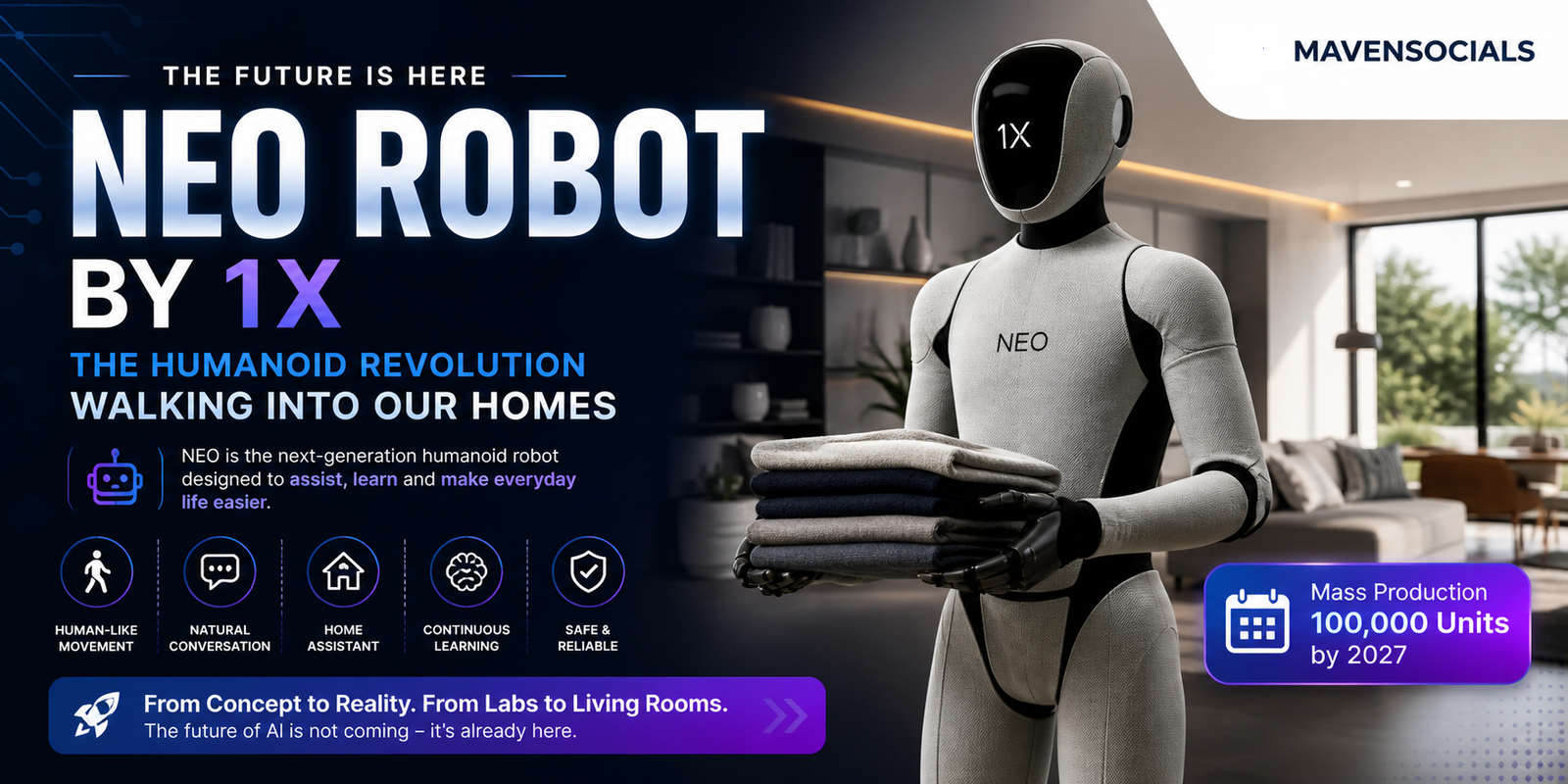
That is now changing with the introduction of NEO robot, a humanoid robot by 1X that represents a major leap in AI-powered home automation.
What is NEO Robot?
The NEO humanoid robot is a next-generation robot designed specifically for human environments. Unlike traditional industrial machines, this home AI robot is built to live and work alongside people.
- Walks like a human
- Understands conversations
- Performs daily household tasks
- Learns and adapts over time
This makes NEO one of the most advanced examples of a personal assistant robot available today.
Technology Behind NEO: Physical AI in Action
The NEO robot combines robotics with advanced artificial intelligence, creating what experts call physical AI.
- LLM-based AI for communication
- Sensor-driven navigation systems
- Real-time learning capabilities
- Human-assisted remote training
This allows the AI humanoid robot to continuously improve and adapt to new environments.
What Can NEO Robot Do?
The humanoid robot for home is designed to perform practical, everyday tasks that make life easier.
- Fold laundry and organize clothes
- Clean and maintain home spaces
- Carry objects and assist with chores
- Help in kitchen activities
- Support elderly or assisted living needs
These capabilities position NEO as a powerful AI home assistant robot.
Mass Production of Humanoid Robots
One of the biggest breakthroughs is the move toward humanoid robots mass production.
1X is building a large-scale factory in California with plans to produce up to 100,000 humanoid robots annually by 2027.
This transition from prototype to production marks a turning point in the future of robotics.
Robots Building Robots: A New Manufacturing Era
Inside the production facility, AI robots are already assisting humans in assembly and logistics tasks.
This creates a powerful loop:
Robots helping build robots
This is a defining moment in AI robotics manufacturing.
Why NEO Robot Matters
The rise of the NEO humanoid robot signals a shift from digital AI to real-world applications.
Instead of just existing in software, AI robots for home can now:
- Interact physically with the environment
- Perform real-world tasks
- Assist humans in daily life
Market Demand and Adoption
The demand for home assistant robots is rapidly growing. Early adoption trends show strong interest from both consumers and businesses.
As production scales, these AI-powered humanoid robots are expected to become more accessible.
Challenges and Limitations
Despite its potential, the NEO robot still faces challenges:
- High initial cost
- Limited autonomy in complex tasks
- Dependence on remote assistance
- Privacy and data concerns
The Future of Humanoid Robots
The future of humanoid robots like NEO includes:
- Greater autonomy through advanced AI
- Improved physical capabilities
- Lower costs through mass production
- Widespread adoption in homes and businesses
This evolution will define the next phase of the AI revolution.
The Bigger Impact
The true impact of AI robots is not just convenience—it’s transformation.
These robots can:
- Reduce repetitive work
- Increase productivity
- Enhance quality of life
- Support aging populations
Conclusion
The NEO robot by 1X represents a major step toward a future where AI-powered home robots become part of everyday life.
As humanoid robots for home move from innovation to adoption, one thing is clear:
The future of AI is no longer on screens—it is walking into our homes.