Introduction: A Culinary Legacy Spanning Thousands of Years
When people around the world think of Indian food, they often imagine vibrant curries, fragrant rice dishes, and warm flatbreads straight off a griddle. But traditional Indian cuisine is so much more than a collection of recipes — it is a living philosophy of nourishment, healing, and cultural identity that has evolved over five thousand years. Rooted in the ancient science of Ayurveda, Indian cooking has always understood that food is medicine, and medicine is food.
Today, as modern nutrition science continues to catch up with age-old wisdom, the world is rediscovering what Indian grandmothers have known for generations: that a well-balanced Indian meal is not only one of the most delicious experiences a palate can encounter, but also one of the most wholesome. From the turmeric-laced dals of Punjab to the coconut-rich seafood curries of Kerala, every region of India offers a treasure trove of flavors that nourish the body and delight the senses.
The Ayurvedic Foundation of Indian Cooking
Traditional Indian cuisine is deeply intertwined with Ayurveda — the ancient Indian system of holistic health. Ayurveda classifies food not just by its nutritional content, but by its qualities, tastes, and effects on the body and mind. According to this system, a truly balanced meal incorporates all six tastes: sweet, sour, salty, pungent, bitter, and astringent. Remarkably, a traditional Indian thali (a platter with multiple small dishes) naturally fulfills all six of these tastes, making it a nutritionally and energetically complete meal.
Spices in Indian cooking are not merely flavor enhancers — they are therapeutic agents. Turmeric contains curcumin, a powerful anti-inflammatory compound. Ginger aids digestion and reduces nausea. Fenugreek helps regulate blood sugar levels. Cumin supports gut health and improves iron absorption. Cardamom detoxifies the body and freshens breath. These ingredients have been used medicinally for centuries and are now validated by modern scientific research.
A Rainbow of Vegetables and Legumes
One of the greatest health strengths of traditional Indian cuisine is its extraordinary reliance on plant-based ingredients. India has one of the world’s highest populations of vegetarians, and Indian cooking has refined vegetarian food into an art form. Legumes — including lentils (dal), chickpeas (chana), black-eyed peas, kidney beans, and split peas — form the backbone of countless dishes and provide an exceptional source of plant-based protein, fiber, iron, and folate.
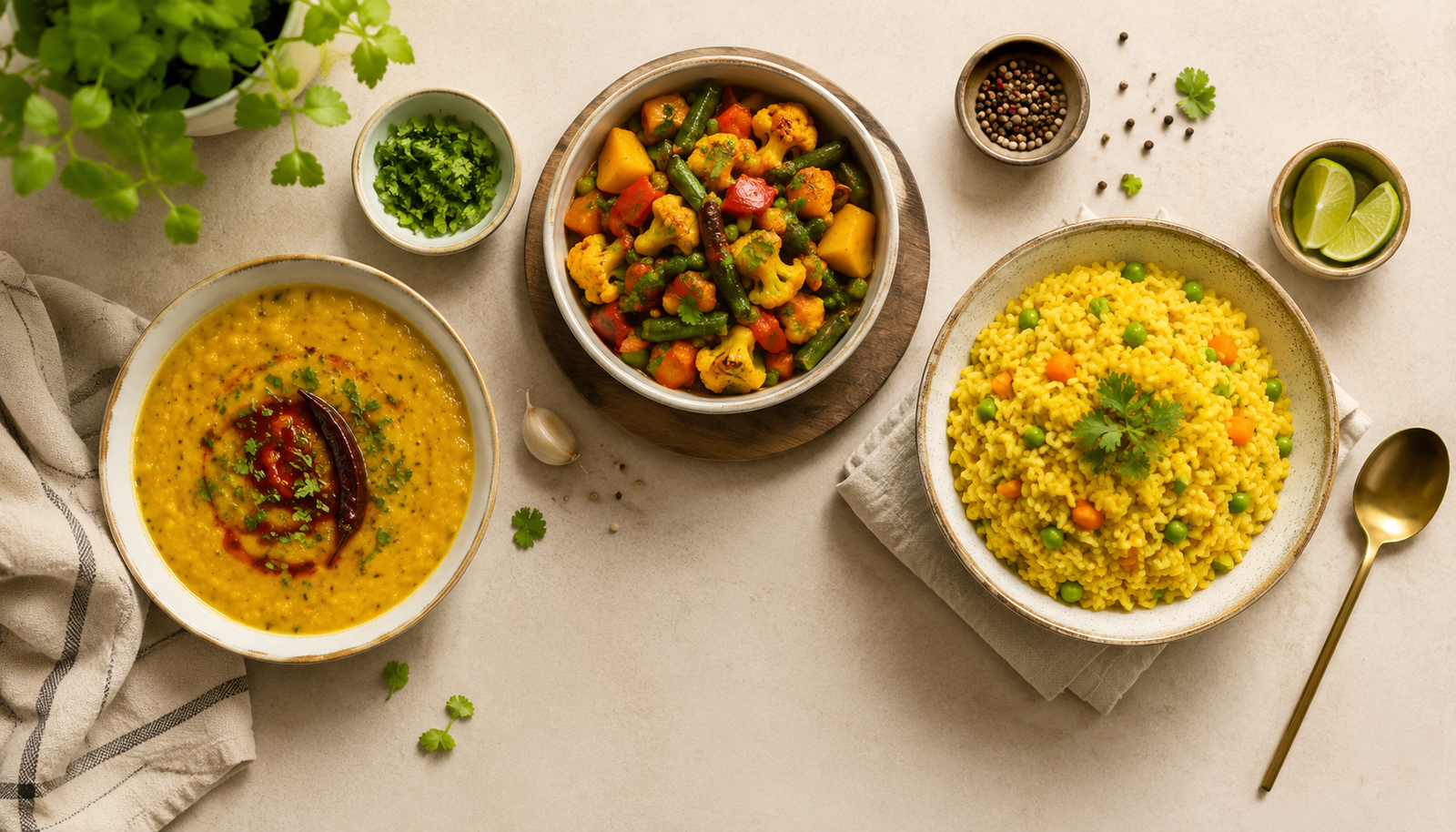
Dal tadka, a humble lentil preparation tempered with mustard seeds, garlic, and dried red chilies, is a staple across Indian households. It is low in fat, high in protein, and deeply satisfying. Similarly, chana masala — a hearty chickpea curry — is rich in complex carbohydrates and dietary fiber, making it an ideal meal for sustained energy. Rajma (kidney bean curry) from North India is another powerhouse dish that combines protein and complex carbs in a deeply spiced tomato-onion gravy.
Vegetables are treated with extraordinary creativity in Indian kitchens. Spinach (palak), fenugreek leaves (methi), drumstick (moringa), bitter gourd (karela), and ridge gourd are just a few of the green vegetables commonly used. These are typically cooked with minimal oil, generous spices, and sometimes yogurt or coconut milk, resulting in dishes that are nutrient-dense without being calorie-heavy.
Fermented Foods and Gut Health
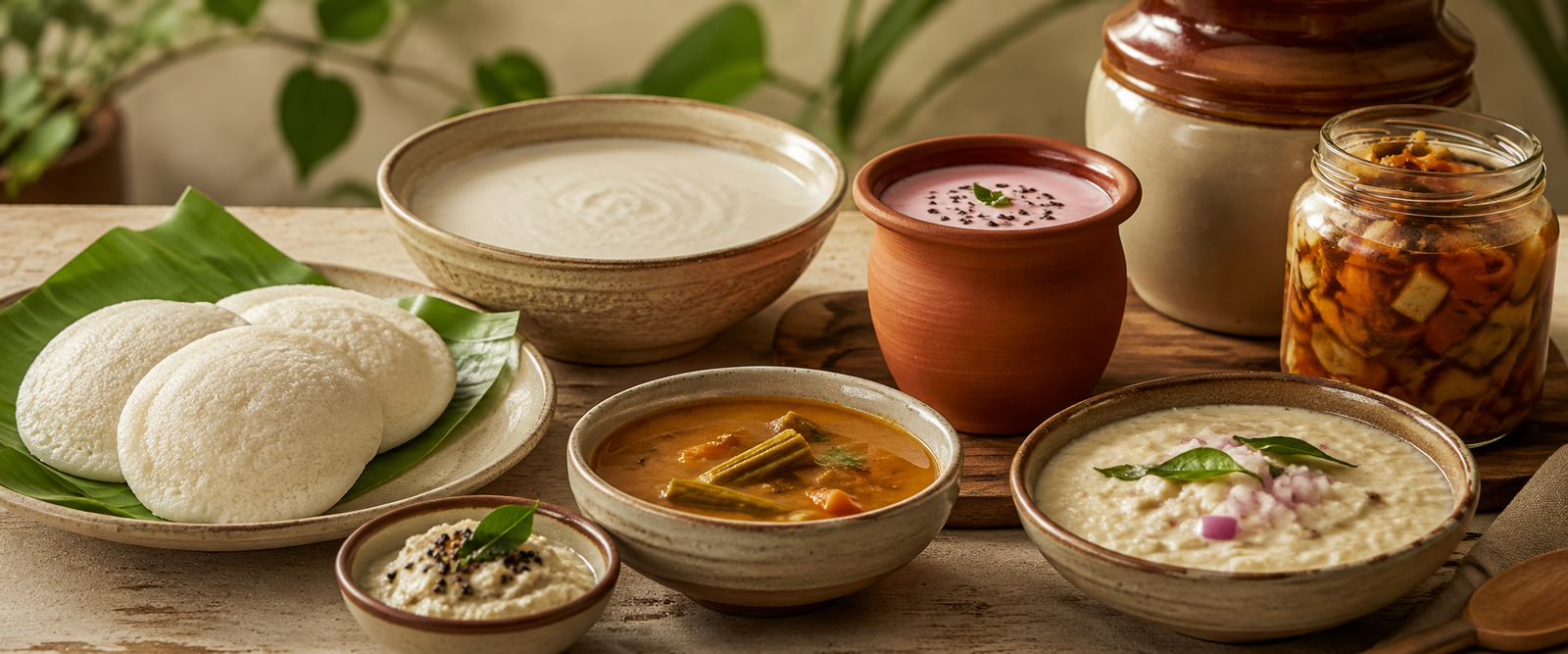
Long before probiotics became a wellness buzzword, Indian cuisine had already mastered the art of fermentation. Idli and dosa — steamed rice cakes and crispy crepes from South India — are made from a fermented batter of rice and black lentils. The fermentation process not only enhances the bioavailability of nutrients but also introduces beneficial bacteria that support gut health and digestion.
Yogurt (dahi) is another cornerstone of Indian cooking. Eaten plain, whipped into lassi, or incorporated into raita (a cooling yogurt condiment), it is consumed daily across India. Rich in probiotics, calcium, and protein, yogurt supports the digestive system and helps maintain a healthy gut microbiome. Kanji — a fermented carrot and mustard seed drink from Rajasthan — is another traditional probiotic beverage that has been enjoyed for centuries.
The Magic of Whole Grains
Traditional Indian cooking favors whole grains over refined ones. Whole wheat chapati or roti, made with just stone-ground wheat flour and water, is one of the simplest and most nutritious breads in the world. Unlike white bread, whole wheat chapati retains its bran and germ, providing fiber, B vitamins, magnesium, and zinc. Millet-based rotis — particularly bajra (pearl millet) and jowar (sorghum) — are staples in rural India and are gluten-free, high in iron, and rich in antioxidants.
Brown rice, hand-pounded rice, and red rice varieties are traditionally preferred in many Indian states. These retain more fiber and micronutrients compared to polished white rice. Dishes like khichdi — a comforting one-pot meal of rice and lentils cooked together with turmeric and ghee — have long been prescribed in Ayurveda as the ideal healing food for the sick, the elderly, and anyone in need of gentle nourishment.
Regional Diversity: A Country of Cuisines
India is not a single cuisine but a vast mosaic of regional food traditions, each shaped by local climate, geography, culture, and religion. The cuisine of Kerala, in the tropical south, is rich in coconut oil, fresh coconut, and seafood, and features bold use of black pepper, cardamom, and tamarind. Kashmiri cuisine from the northern mountains is known for its slow-cooked meat dishes, saffron, and dried fruits. Gujarati cuisine from the west is predominantly vegetarian and balances sweet, sour, and spicy notes with great precision. Bengali cuisine from the east is celebrated for its delicate fish preparations, mustard oil, and a sophisticated range of sweets.
This regional diversity ensures that Indian cuisine offers something nutritious and delicious for every palate and dietary preference. Whether you are vegan, vegetarian, pescatarian, or an omnivore, the Indian culinary tradition can provide you with deeply satisfying, nutritionally complete meals.
Ghee: The Misunderstood Superfood
Clarified butter, or ghee, has been used in Indian cooking and Ayurvedic medicine for thousands of years. Long unfairly demonized during the low-fat diet era, ghee is now recognized by nutrition researchers as a healthy fat in moderate amounts. It is rich in fat-soluble vitamins A, D, E, and K, as well as butyric acid — a short-chain fatty acid that feeds the cells lining the gut and supports intestinal health. Ghee has a high smoke point, making it stable and safe for high-heat cooking, unlike many refined vegetable oils.
Practical Tips to Eat Healthier the Indian Way
Incorporating the wisdom of traditional Indian cuisine into your daily life does not require a complete overhaul of your diet. Start by adding one dal dish per week to your meals — a simple moong dal takes less than 30 minutes and delivers impressive nutrition. Experiment with turmeric in soups, stews, or golden milk. Replace refined grains with whole wheat rotis or millet flatbreads. Use mustard seeds, cumin, and asafoetida in your cooking — these small additions dramatically enhance both flavor and digestive benefits.
Make yogurt a daily habit. Reduce oil in curries by focusing on spice depth rather than fat for flavor. Drink herbal preparations like jeera (cumin) water, tulsi (holy basil) tea, or ajwain (carom seed) water for digestive support. These are centuries-old wellness practices that are as relevant today as ever.
Conclusion: Ancient Wisdom, Modern Nourishment
Traditional Indian cuisine stands at a remarkable intersection of taste, culture, and health. It is a cuisine that feeds the soul as much as the body — one that celebrates community, ritual, and the deep pleasure of sitting down to a lovingly cooked meal. As the world increasingly turns toward plant-based diets, functional foods, and gut-friendly eating, the ancient traditions of India offer a roadmap that is both time-tested and forward-looking.
Whether you are exploring Indian food for the first time or rediscovering the dishes of your heritage, know this: every bowl of dal, every golden smear of turmeric, and every bite of warm chapati carries within it the accumulated wisdom of generations who understood that to eat well is to live well. Traditional Indian cuisine is not a trend — it is a timeless gift to global wellness.
Written by the MavenSocials Editorial Team. Follow us for more food, wellness, and lifestyle content.